
Launching Soon: The Business Builder Program for Coaches
Are you considering starting a coaching business, either full-time or a side hustle? If so, read on.

Achieving Dreams: Coaching Techniques for Supporting Others’ Success
Every individual you meet likely has aspirations, a vision for a better self and a richer life. Yet, the journey to actualize these dreams often comes with barriers that can leave many unsure about how to proceed or whom to consult for guidance.

Making the Cut: We’re in the Top 10 Best Coaching Programs!
We’ve always believed in the transformative power of guidance, the magic that happens when someone finds their purpose, and the ripple effect that quality coaching can create in the world. Today, we’re thrilled to share a shining testament to our dedication: our inclusion in the list of the ‘Top 10 Best Coaching Programs‘ and ranking number 1 on their list!

10 Key Leadership Actions
Becoming a leader is not about your job title or position; it’s about your actions and the examples you set. People choose to follow those they admire and respect. To cultivate leadership and guide a team effectively, it’s essential to embrace certain qualities, characteristics, and actions. Here are ten crucial steps to establish your leadership status:

It’s lonely being “the only”
How we define ourselves is shaped by our beliefs and values and ultimately drives what we think, say and do. These internal narratives that stream through our minds are influenced by our experiences throughout our lifetime; the way we relate to the world around us. From the relationships we have, the choices we make as well as how others interact and engage, these powerful stories remain with us, every day.

How Diversity, Equity, Inclusion, and Belonging Drive Personal and Organizational Growth from a Coaching Perspective
Our world is more interconnected than ever before, and the importance of embracing diversity, equity, inclusion, and belonging (DEIB) in the workplace – and in life – cannot be overstated. Immediately the teachings of Napoleon Hill, Zig Ziggler, and Tony Robbins come to mind, extending beyond success principles to embrace the significance of fostering a diverse and inclusive environment. In this reflection, we will explore each of the DEIB principles from a coaching perspective, and how they can drive individual and organizational growth.

Coaching Challenge #1: Coaching the Uncoachable
Buckle up, this topic deals with a particularly prickly challenge –coaching the uncoachable. Let’s get to the point: The notion that some people are uncoachable goes against our grain. We prefer to think that everyone can be coached –if we just know the right approach!

A Tale of Two Coaches and Their Coach-Education Journey to ICF Credential
How exciting it is that coaches are everywhere these days. Organizations are incorporating coaching cultures and there are several coaching hashtags now, such as: #coachingcommunity #coachingculture #coachingjourney #coachingworks #coachingskills #coachingmindset #coaching #coachingtips #coach #coachtraining
#coachingrofessionals #coachingbusiness #coachinglife #coachingprogram #coachingonline and the list goes on!
What does this coaching trend mean? We believe it means the Coaching industry is at a tipping point where certifications and credentials have become necessary and required to meet demand, and Coaching Out of the Box® is at the forefront of supporting ICF-accredited coach education programs to those who are seeking an ICF Credential.

Student Insights
For almost 37 years, Coaching Out of the Box® has been “Committed to Excellence” (The Business Insider) in coach education, providing world-class coach education programs and courses that are fully accredited by the International Coaching Federation (ICF). We are also committed to providing thought-leadership information and insight that is timely, topical, and relevant to those of you who are new to the coaching profession, are seasoned coaches, and those of you who are just starting out on your journey to acquire coaching skills, training and/or attaining a coaching credential. Accordingly, today’s article is not written by anyone here at Coaching Out of the Box® but rather we share with you the words of a former student who, like so many, has chosen to embark on our Fast Track to ICF Credential program as well as our popular Certified Diversity Coach Program. On behalf of the Coaching Out of the Box® team, it gives me great pleasure to share the following from Beate Trost, ACC and founder of Cookies and Tea (mycoachingcollective.com):

To Be Or Not To Be Credentialed?
Some of the most notable questions we receive from our students who are on their coach-education journey, are “Will acquiring an International Coach Federation (ICF) credential really make a difference in my coaching career?” It is a legitimate question, worthy of exploration. One might also ask, “Why obtain a coaching credential when a license in this profession is not required by law?” Again, this is another great question, and based upon our experiences here at The International Coaching Group, Inc., dba Coaching Out of the Box®, we believe the following adequately and thoughtfully answers these questions for all aspiring and current coaches – especially those who are committed to the profession.

A Fireside Chat with Coaching Out Of The Box®’s CEO, Pablo Leites
The global Coaching Trend continues to grow, so Ellie Tava, our Director of Sales, sat down with Pablo Leites, CEO of the International Coaching Group, Inc. dba Coaching Out of The Box® to ask him “why is coaching so popular and how is Coaching Out of The Box® meeting the global coaching education demands of today and in the future?” They also talk about where he sees coaching education trends in five years. Read on to learn a little more about Pablo – his mission and his passion.

The First Coaching Tip for 2023
Be Positive is Healthier.
Here is a little challenge from your coach. Make 2023 the year of positive health.
Take the P-Pill twice a day.
The P-Pill stimulates you to consciously, purposely even, seek to get the medicinal benefits of observing the positive in every moment you are in. Right now! and every now!
You already know positive thoughts change your body chemistry. So why not manufacture the drug for yourself? Set an intention to observe the tangible positive things that actually occur in as many moments as you can each day. Consciously note what is positive, what is working, and what is real. Like right now. Of all the things that are happening around you and to you, what is good about this moment you and I have together?
Level 1 – ICF Accredited
After great effort and hard work, we’re very excited and proud to announce that Coaching Out of the Box® has been approved as a Level 1 International Coaching Federation (ICF) Accredited Coaching Education Provider.

What’s Next? Business Name
Sixth in the What’s Next? Series
Business name, the last in our series of What’s Next? but definitely not the least important task. Niche, tone, branding, marketing, social…all are important and over the course of the last few months, we’ve looked at each individually.
To recap, here are the tasks to consider when focusing on what’s next in starting your business:
Website- August newsletter
Niche- September newsletter
Tone, branding, personality- October newsletter
Marketing – November newsletter
Social – December newsletter
Business name

What’s Next? Social Media
Fifth in the What’s Next? Series
Website- August newsletter
Niche- September newsletter
Tone, branding, personality- October newsletter
Marketing – November newsletter
Social
Business name

Marketing- Fourth in the series What’s Next?
Website- August newsletter
Niche- September newsletter
Tone, branding, personality- October newsletter
Marketing
Social
Business name
What is the purpose of your marketing?
How is your marketing plan aligned with your purpose?
Who is your prime audience/ client?
How much time do you want to spend on marketing?

Tone, Branding and Personality. Part 3 of What’s Next?
Tone, Branding and Personality
Website- August newsletter
Niche- September newsletter
Tone, branding, personality
Marketing
Social
Business name


What’s your niche?
Who do you want to be as a coach?
Who is your ideal client?
Who do you NOT want as a client?
Website- August newsletter
Niche- September newsletter
Tone, branding, personality
Marketing
Social
Business name

The Writing Dilemma
On the issue of taking notes during a coaching session…
This is a question that often surfaces in coaching training. Is it ok for the coach to write while conducting a coaching session? What are the pros and cons of taking notes in coaching?
When it comes to coaching, I usually try to stay away from “black and white” answers.
Coaching is a human-to-human interaction, and as so, full of gray areas.
Writing while coaching is possibly one of them.
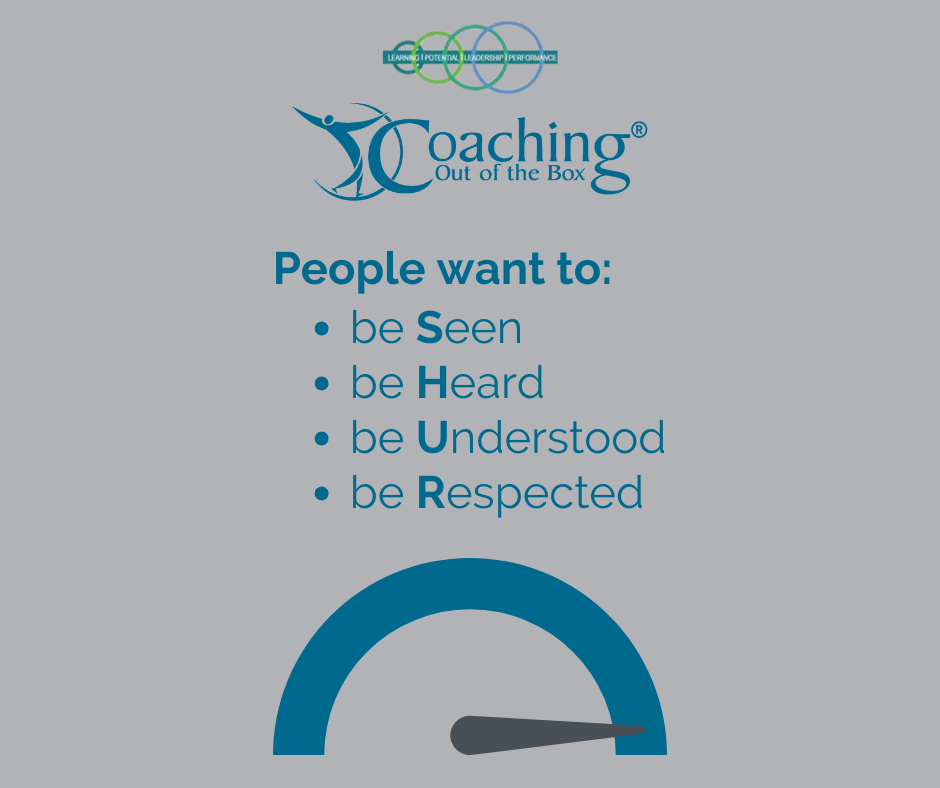
be S.H.U.R.: Evolving Your Coach/Leader Approach
As coaches and leaders, the one constant that remains is our need to adapt and evolve our techniques and approach to our craft. This has never been more important than today, when every company, based on customers, suppliers, and employee location, is a global company. As generation Z pours into the workforce, balancing five generations in the workplace, whether they show up and/or “zoom-in”, our complex environment continues to challenge many leaders. Meanwhile, geo-political instability, climate change, pseudo-recession, and endemic fears add stress and uncertainty for everyone.

Back to School Season
How did you use your white space this summer?
Did you get in your state of flow?
How did you feed your soul?

What’s next?
That’s the big question. Whether you’re starting your coach training, are in the midst of it or you’ve completed your training, What’s next? is a big question that’s probably on your mind. What’s right in front of you? Using your new coaching skills in your current role? Adding a side gig? Or starting your new path as a credentialed coach and offering your services? Two out of three of these options are bigger than the other. Let’s talk about that.

Coaching Topic Fatigue
Coaching Topic Fatigue: How to Overcome It You are taking a coach training program, and part of this is tons

Big Changes Coming to the Credentialing Process
You may have heard the buzz that is happening at the ICF (International Coaching Federation) right now… all these changes but what is in a change? Let us enlighten you as we assure you, the ICF has just made it easier for Coaching Out Of the Box to remain your single place to obtain the coach training, mentoring, and professional assessment you need to comfortably apply for your ICF Associate Certified Coach (ACC) credential.
The ICF is the Gold Standard for professional coaches around the world, since its inception in 1995 the ICF has been a vital element in the industry providing accreditation to coaches. This accreditation begins with the coach training and as providers of coaching education, it has been our role to ensure that our training meets the ICF’s high standards.